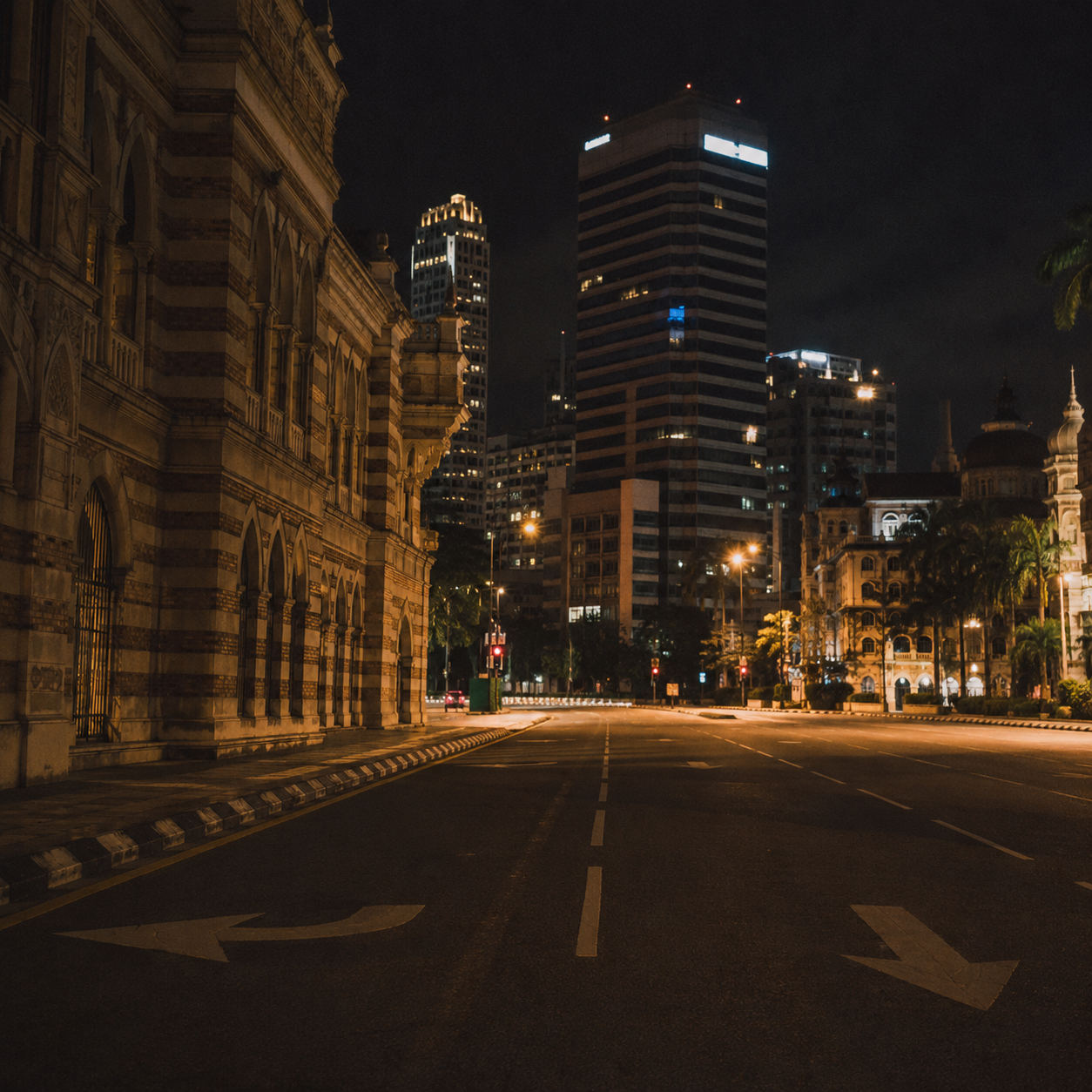
The Prime Minister spoke at 10 pm on Monday, 16 March 2020. The Movement Control Order would take effect at midnight on 18 March. All non-essential services would close. Gatherings were prohibited. The country, in effect, would stop.
I was at my desk when the announcement came through. My phone started immediately — a club football PRO, a gym owner in Cheras, a contact at the National Sports Council. Everyone asking the same question: does this include us?
It included everyone.
The First 48 Hours
By the morning of 17 March, Malaysian sport was in a state of organised confusion. The FAM had matches scheduled for the weekend. The Super League programme was mid-season. ONE Championship had events in the pipeline. The SEA Games qualifiers were on the calendar.
Within hours of the announcement, cancellations began cascading. The Super League season was suspended immediately. MMA gyms locked up. The badminton halls, the swimming pools, the athletics tracks — all closed.
According to the official government MCO directive published on 18 March 2020, sports and recreational facilities fell under the non-essential services closure. There were no carve-outs for professional athletes, no accommodation for national squad training, no differentiated protocol for sports at various levels of organisation.
Everything stopped at once.
The Sports Industry in the First Hours
What became clear in the first 48 hours was that the Malaysian sports industry had no crisis protocol. This is not a criticism unique to Malaysia — virtually no national sports system had a pandemic response plan, because a pandemic of this scale was outside the planning horizon of any normal risk assessment.
But the absence of protocol meant that every organisation, club, federation, and individual athlete was navigating the shutdown independently and simultaneously. The National Sports Council issued guidance where it could. The major federations communicated with their national squads. Below that level, clubs and gyms were largely on their own.
The financial implications hit immediately. Club sports that operated on membership fees and session payments saw their income stop in two days. Small gyms, private coaching operations, sports event businesses — the ecosystem of commercial activity around Malaysian sport is vast and almost entirely absent from official sports accounts, and it was uniformly affected from the night of the announcement.
What Sports Meant to People
I spent the first days of the MCO calling people I knew in various corners of Malaysian sport. A judo coach in Johor Bahru who ran a junior programme that was the central activity of forty children’s weeks. A golf club secretary in Selangor whose members used the club as their primary social community. A morning running group organiser in Petaling Jaya whose participants were mostly older adults for whom the regular exercise was also a mental health anchor.
Malaysian sport is not only the national teams and the Olympians and the Super League. It is the entire infrastructure of organised physical activity that sustains health, community, and wellbeing across the country. The MCO’s impact on athletes’ bodies is measurable. The impact on the broader sports community — on the habitual exercisers, the recreational participants, the kids in youth programmes — is much harder to quantify and much less often discussed.
The Night That Changed the Calendar
The Malaysian sports calendar for 2020 — the one that had been published in January, that athletes and clubs and federations had built their years around — effectively ceased to exist on the night of 16 March.
What replaced it was uncertainty. Initially the MCO was for two weeks. Then it was extended. Then extended again. The events that had been postponed to April were pushed to June, then later in the year, then to 2021. Some never happened at all.
Malaysian sport, like everything else in the country, had entered a period for which there was no map. The night of 16 March was when that became real.
The industry that emerged from that period was changed in ways that are still being understood. But it emerged. That, too, is part of the story.