When Malaysian sports facilities began reopening in phases from May 2020, the sports scientists and physiotherapists who work with national and club athletes were dealing with a problem that had no established playbook. How do you safely return athletes to full training after an enforced break of eight to twelve weeks — or longer, for those who had been unable to access any meaningful training environment during the MCO?
The answer, it turned out, was more carefully and more slowly than the athletes wanted.
The Deconditioning Evidence
The sports science literature on deconditioning is well established. Cardiovascular fitness begins declining within days of cessation of training. Muscular strength is more durable but begins measurably declining after two to three weeks of full inactivity. The specific neuromuscular patterns that underpin high-performance sport — the precise coordination, the reaction speed, the sport-specific movement efficiency — erode on timelines that vary by individual and training history but are typically faster than athletes expect.
By the time Malaysian sports facilities reopened, athletes who had managed to maintain some training at home had partially mitigated these effects. Athletes who had had no access to appropriate training — those in apartments without outdoor space, those with no equipment, those who had simply not structured their lockdown time effectively — had experienced substantial deconditioning across multiple physical capacities.
According to guidance issued by the National Sports Council on return-to-sport protocols, the recommended approach for high-performance athletes was a phased return to full training over a minimum period of three to four weeks, with load monitoring and injury surveillance throughout.
What the Physiotherapists Found
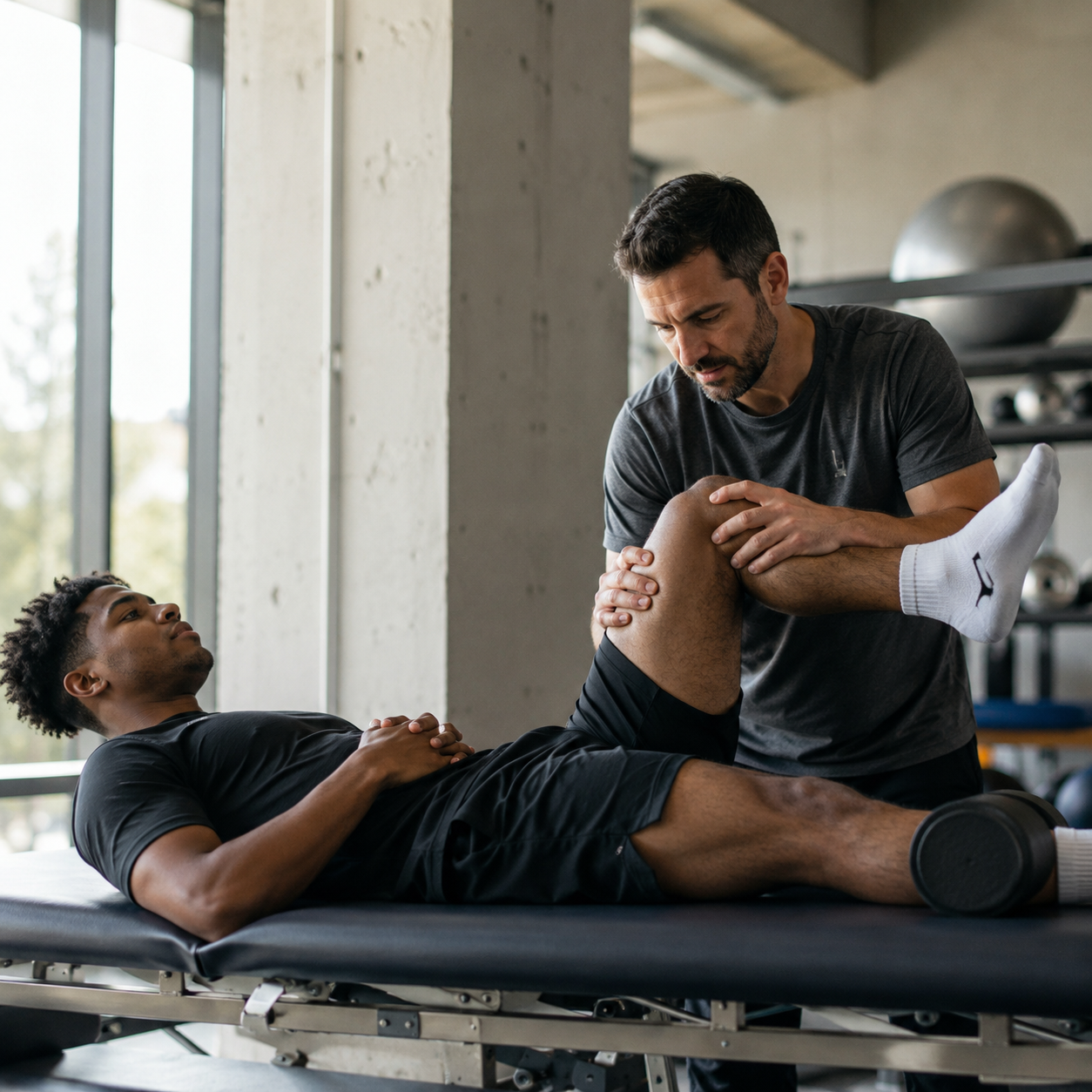
The ISN’s physiotherapy and sports medicine staff, and their counterparts at the major club programmes, documented the post-MCO return period carefully. The injury picture that emerged was instructive.
The injuries that presented in the first four to six weeks of resumed training were concentrated in two categories: overuse injuries from athletes who returned to full training volume too quickly, trusting their subjective sense of readiness over objective deconditioning data; and acute soft tissue injuries from athletes whose neuromuscular control had declined in ways they could not feel but which became apparent under the mechanical demands of full-speed sport.
This pattern — particularly the soft tissue injuries — was consistent across sports. Malaysian MMA, football, badminton, athletics: the return-to-training injury spike in June and July 2020 was a documented reality, not a hypothesis.
The Mental Dimension
The physical return was complicated by a psychological dimension that not enough attention was paid to at the time. Athletes who had spent months in a state of suspension — uncertain about competition schedules, uncertain about their career trajectories, uncertain about their physical condition — did not return to training with the mental clarity of a normal pre-competition camp.
Some came back with a hunger born of frustration. Some came back with anxiety about their fitness that manifested in overtraining. Some came back with a disconnection from their sport that months of enforced absence had created and that physical training alone could not resolve.
The mental health crisis in Malaysian sport had its roots in this period, even if its full manifestation came later. The June 2020 return was the first test of how Malaysian athletes would cope with a disruption for which nobody had prepared them.
The Lesson for Future Planning
What the MCO return-to-sport period established, clearly and measurably, was that Malaysian sports programmes needed pre-designed protocols for extended training interruptions. The lack of such protocols in March 2020 meant that every federation and every coach was improvising independently, producing inconsistent guidance and variable outcomes.
By the time Tokyo 2021 required another round of disruption management, the ISN had begun formalising what the MCO had taught. The Paris 2024 cycle reflected that learning — in load monitoring, in psychological support, in the structured return protocols that were now standing documents rather than improvised responses.
The lockdown gave Malaysian sports science its first large-scale natural experiment in deconditioning and return-to-sport. The data from that experiment is now informing how Malaysian athletes train, rest, and recover. That is not nothing — even if the experiment itself cost more than it was worth.