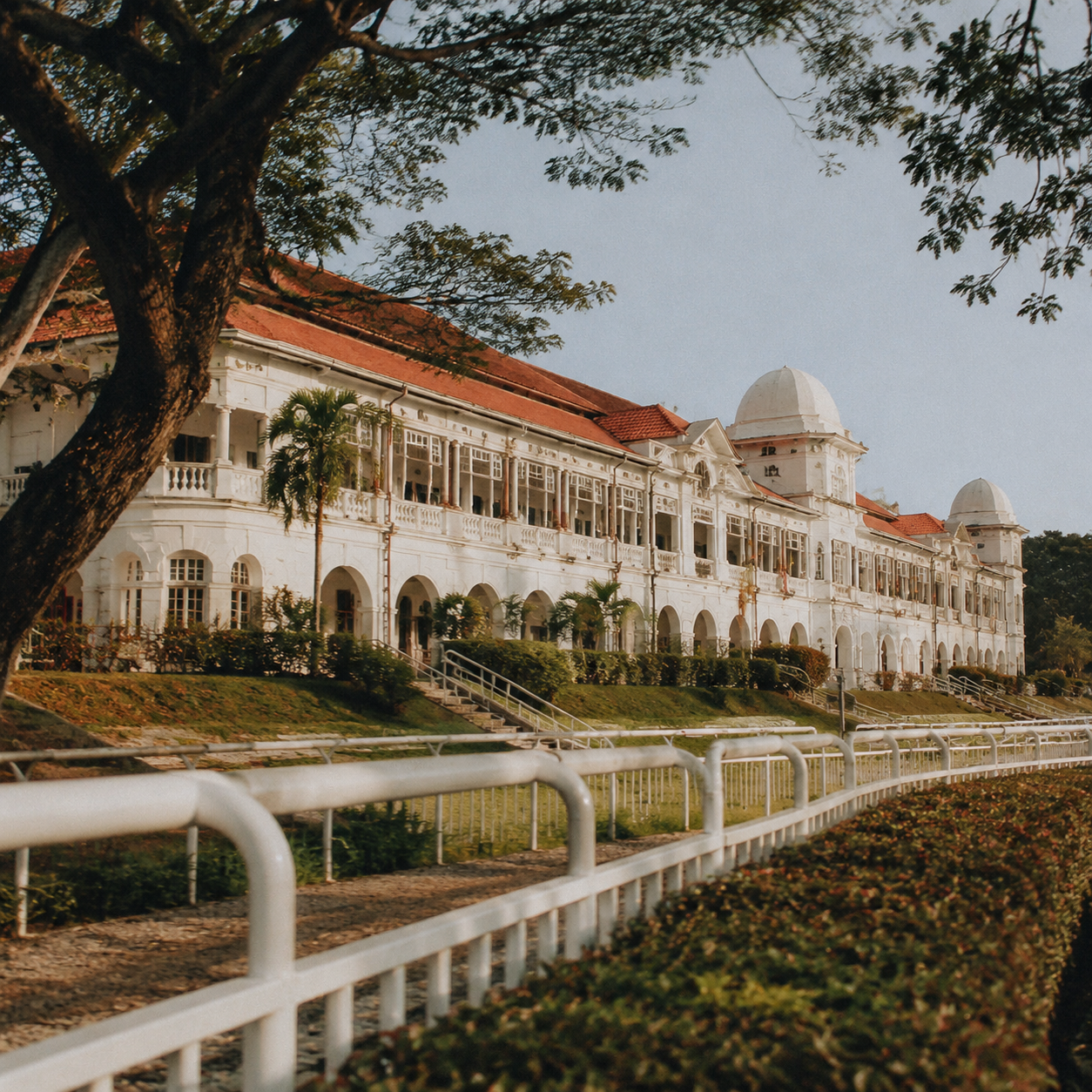
Selangor Turf Club was founded in 1896. One hundred and twenty-five years later, the anniversary found the institution in its most complicated position since the war years — a global pandemic had emptied its grandstand, the racing calendar had been compressed and disrupted, and the questions about what Malaysian horse racing looks like in another decade had moved from the edges of industry conversation to its centre.
I have been covering Malaysian racing on and off for fifteen years. The Selangor track at Serdang is one of the places where I have spent unhurried hours watching horses work in the morning and talking to trainers who are as knowledgeable about their animals as any sports professional I have ever interviewed. There is a culture there that is worth preserving and genuinely at risk.
What 125 Years Represents
The founding of Selangor Turf Club in 1896 predates the Federated Malay States, the Malayan Union, and the Federation of Malaya. It predates the specific political configuration of the country whose name it now carries. Racing in Selangor has been a continuous presence through colonial administration, Japanese occupation, independence, and the full arc of modern Malaysian national life.
According to Selangor Turf Club’s own historical documentation, the club has hosted thousands of race meetings across its 125-year history, functioning not just as a sporting venue but as a social institution — a place where community, commerce, and competition intersected in ways that are specific to its era and its location.
That history is not a reason to preserve an institution regardless of economic reality. But it is context for understanding what is lost if the racing culture it represents disappears.
The 2021 Reality
The 125th anniversary year arrived during the MCO period. The pandemic had suspended sporting activity across Malaysia from March 2020, and while racing had resumed before many other sports, it resumed in front of empty grandstands. The post-COVID empty grandstand experience was Selangor’s lived reality for its anniversary year.
The financial implications of operating without spectators — no gate revenue, reduced wagering income, full operational costs — were significant. Selangor Turf Club had more institutional depth than Penang and could absorb the disruption better, but the pressure was real.
The Land and Development Context
The Serdang site is valuable. The surrounding area has developed substantially since 1896, and the land that the turf club occupies represents a different kind of asset than it did when the club was founded at the edge of habitation.
The questions about Selangor Turf Club’s long-term future increasingly involve this land dimension. Racing clubs across the world have faced versions of this pressure. Some have found ways to coexist with development by restructuring the venue, reducing the footprint, or finding new commercial arrangements that sustain racing on a smaller scale. Others have sold, relocated, or dissolved.
Where Selangor Turf Club sits in that spectrum at its 125th anniversary is unclear. The conversation is ongoing, the pressures are real, and the institution has survived enough of Malaysian history to know that outcomes that look inevitable sometimes are not.
Racing’s Cultural Dimension
There is a dimension of Malaysian horse racing that the commercial industry figures and the land value calculations do not capture: the social fabric of the racing community itself. Trainers who have spent thirty years at the Serdang track. Jockeys building careers in a discipline that requires years of development. Stable staff whose expertise is specific and deep and not easily transferable to other industries.
A 125th anniversary is an opportunity to take that cultural dimension seriously, not just to produce commemorative programmes and historical photographs. The institutions that endure do so because they find ways to make the cultural argument alongside the commercial one.
Whether Selangor Turf Club can make both arguments convincingly in the next decade is the question that 2021 left open.