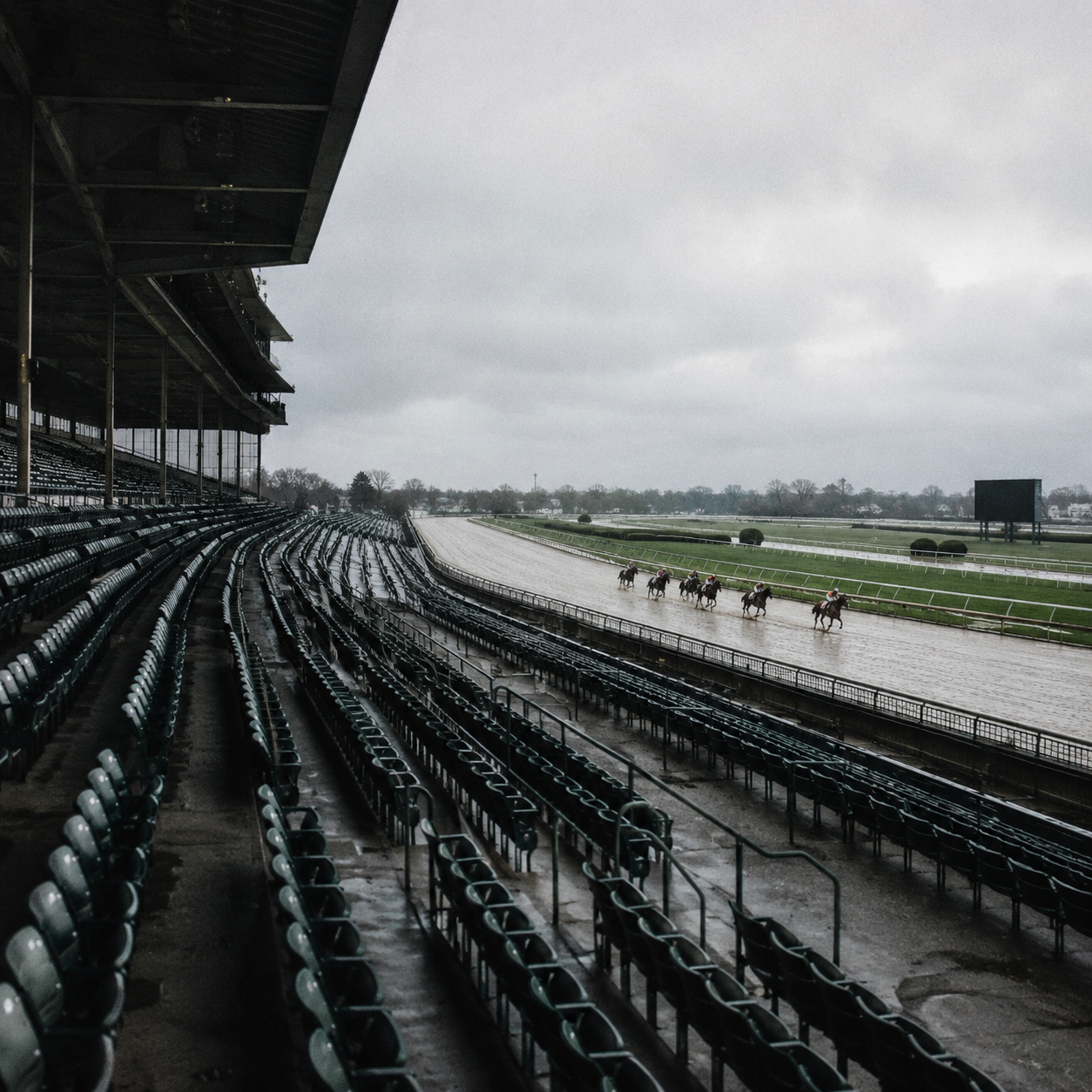
The horses do not know the grandstand is empty.
That was the thought I kept returning to during the first race meetings I attended at Selangor Turf Club after racing resumed following the initial MCO period. The animals came onto the track the same way they always had — the rolling walk, the lateral twitching, the sharpened attention that horses bring to a competitive environment. The jockeys settled. The gates opened. The race was run.
From where I sat in the empty grandstand, the sound was different. You could hear the hooves on the turf with a clarity that crowds usually absorb. You could hear the jockeys’ calls. You could hear the track official’s announcements echoing in a space built for thousands, occupied by dozens.
The Racing Without Audiences
Malaysian horse racing resumed under restricted conditions before many other sports returned to normal operations. The nature of racing — horses and jockeys cannot exactly train over video call — gave it an argument for resumption that more easily restructured activities could not make. But the spectator restrictions that came with resumption fundamentally changed what the event was.
According to the Malaysia Racing Authority’s race schedule updates, the post-MCO race calendar ran broadly as planned in terms of frequency and structure. The logistics worked. The horses ran. The results were recorded. The wagering, which had shifted to digital platforms during the MCO period, continued.
What was missing was the crowd. And the crowd, in Malaysian horse racing, is not merely an audience — it is a substantial part of the industry’s financial and social logic.
The Wagering Dimension
Malaysian horse racing’s financial model depends heavily on totalisator wagering, which generates revenue that supports prize money, operations, and the infrastructure of the clubs. The shift to online and telephone wagering during the pandemic period partially compensated for the loss of on-course wagering, but the on-course experience — the physical presence at the track, the sense of the day as an occasion — drives a particular kind of engagement that digital platforms replicate only partially.
Casual racing fans, the type who attend for the social experience as much as the competition, did not come back quickly once restrictions eased. The habit of a racing day requires the habit of a racing day — and months of enforced absence had interrupted habits in ways that were proving slow to rebuild.
The People Who Stayed
The empty grandstand period was hardest on the people whose professional lives are bound to the track regardless of whether spectators are present. Trainers, stable hands, farriers, track officials — the ecosystem of employment that a racing club sustains operates whether or not a ticket is sold.
I spoke to a trainer at Serdang who had been at the track for twenty-two years. He described the empty-grandstand period as professionally odd but personally clarifying. Without the social noise of race day, the work became more purely about the horses. He found it strangely absorbing.
The same trainer was less sanguine about what the prolonged absence of crowds meant for the industry’s long-term health. Young people do not develop an interest in racing by watching a livestream in isolation. They develop it by being at the track, with family or friends, experiencing the thing in person. That generational introduction had been interrupted.
The [125th Anniversary] Context
That this period coincided with Selangor Turf Club’s 125th anniversary year added a particular quality to the atmosphere. An institution marking a century and a quarter of continuous operation was doing so in empty grandstands, with its long-term future the subject of active speculation.
The irony was not lost on anyone who had spent time in the racing community. But irony is not the same as inevitability. The sport had run through harder disruptions in its history. Whether it could rebuild its audience after the pandemic would depend, in part, on whether the industry made deliberate efforts to reconnect with the casual fans whose habits had been broken.
The horses kept running regardless. The question of who comes back to watch them remains, as of 2021, unanswered.