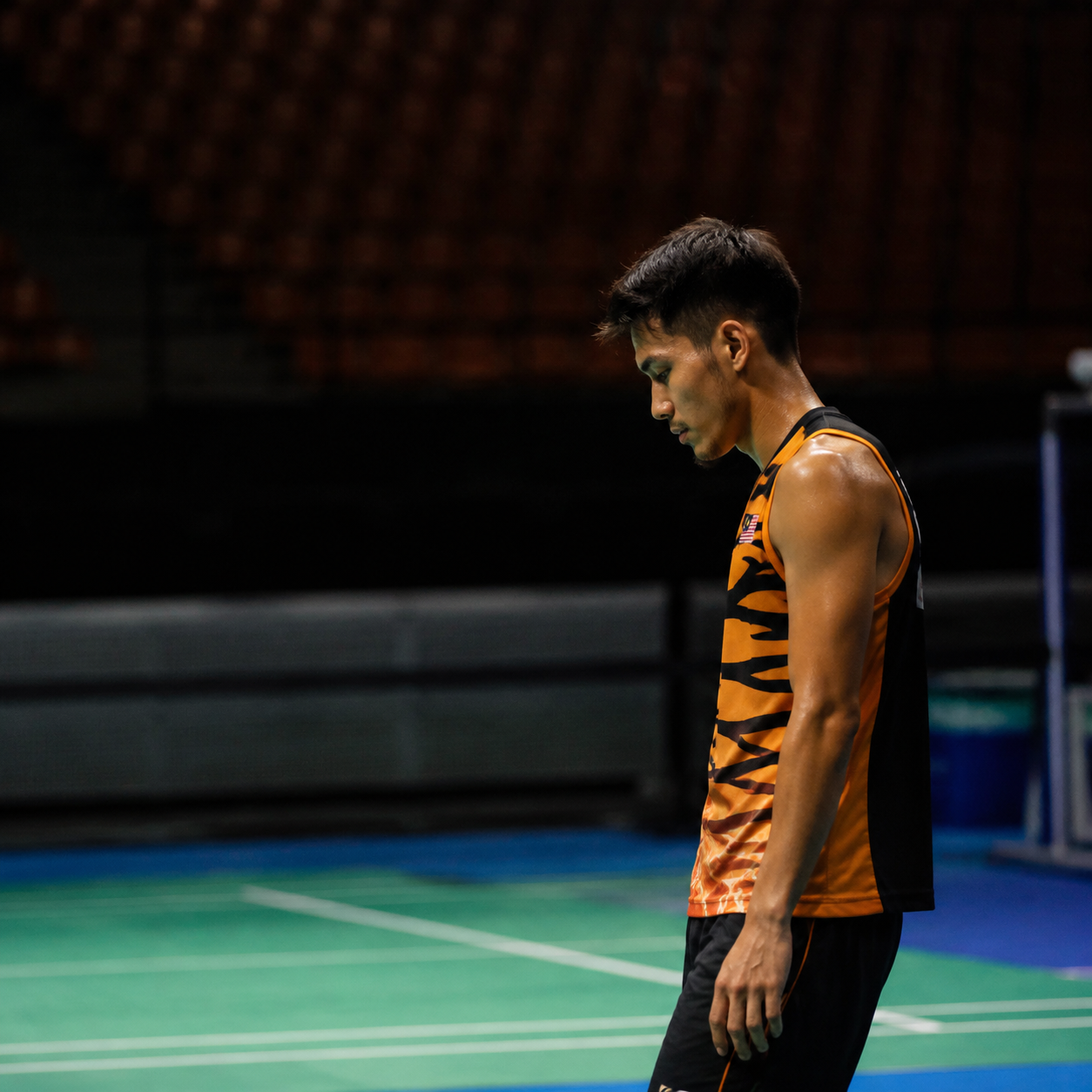
The physical injuries were visible and measurable. When gyms reopened after the MCO and athletes returned to training, the physiotherapists saw exactly what they had predicted: deconditioning, overuse injuries from compressed preparation timelines, muscle imbalances from months of improvised home training. The sports science community had documented those effects carefully.
What took longer to surface — and is still not fully surfaced — was the psychological toll.
By early 2022, sports psychologists working with Malaysian national programmes were describing a pattern that had moved beyond the expected adjustment difficulties of returning to competition. Anxiety presentations. Motivation collapse in athletes who had previously been highly driven. Identity disruption in competitors whose entire sense of self was organised around sporting performance that had been intermittently suspended for nearly two years.
What the Pandemic Did to Athletes
The pandemic years were psychologically complex for everyone. For athletes, the complexity had specific dimensions.
Athletic identity — the self-understanding that comes from being a competitor, a team member, a ranked performer in a defined hierarchy — depends on the existence of competition and training environments. Strip those away, and the psychological scaffolding around which many athletes have organised their lives becomes unstable.
The Malaysian athletes who managed the MCO period best, psychologically, tended to be those who had strong identity resources outside their sport — strong family structures, clear religious frameworks, alternative interests — that gave them stability when the competitive identity could not be expressed. Those who had invested most completely in their athletic identity, often the highest performers, were sometimes the most fragile.
According to the Malaysian Sports Medicine Association’s position statements on athlete welfare, the mental health dimension of sports medicine had been underfunded and underemphasised in Malaysian sports administration before the pandemic. The crisis of 2021-2022 made the absence visible.
The Bubble Athletes
A specific subset of Malaysian athletes faced a particular psychological challenge: those who had entered the ONE Championship bubble or equivalent closed competition environments. The combination of genuine athletic performance demands and extended social isolation produced psychological effects that were only partially understood while they were occurring.
When bubble athletes returned to normal training and competition environments, some made the transition smoothly. Others found it more difficult than expected — the sustained hypervigilance of bubble life, the disrupted sleep patterns, the attenuated social connection — did not simply resolve when the bubble ended.
The sports psychology support that existed in Malaysia was not resourced or configured for this specific population. The help that was available was largely drawn from general mental health provision rather than sports-specific psychological support.
The Structural Gap
Malaysia’s sports psychology infrastructure in 2022 was concentrated at the ISN in Bukit Jalil, with coverage that thinned rapidly below the national level. State teams, club athletes, recreational competitors who participated in representative sport at lower levels — these populations had essentially no access to sports-specific psychological support.
The pandemic produced a mental health challenge that was distributed across the full breadth of the Malaysian sporting population. The response was structured for the top.
This is not unique to Malaysia. The mismatch between sports psychology provision and athlete need is a global problem. But the pandemic made it visible in Malaysia in ways that should have produced structural responses.
What Changed, and What Did Not
By 2022, the ISN had expanded its psychology provision and several national federations had added psychological support to their athlete welfare programmes. The Paris 2024 cycle embedded sports psychologists in preparation in ways that would have been unusual in 2018.
These are genuine improvements. They are improvements at the top of the pyramid.
The invisible injury below that level — the club athlete who stopped competing after the pandemic, the junior who lost their love for the sport in two years of disruption, the adult recreational competitor who never returned to their team — those are not captured in the ISN’s data or reflected in the national programme improvements.
The full psychological cost of the pandemic on Malaysian sport will take years to properly measure. We have barely started counting.