
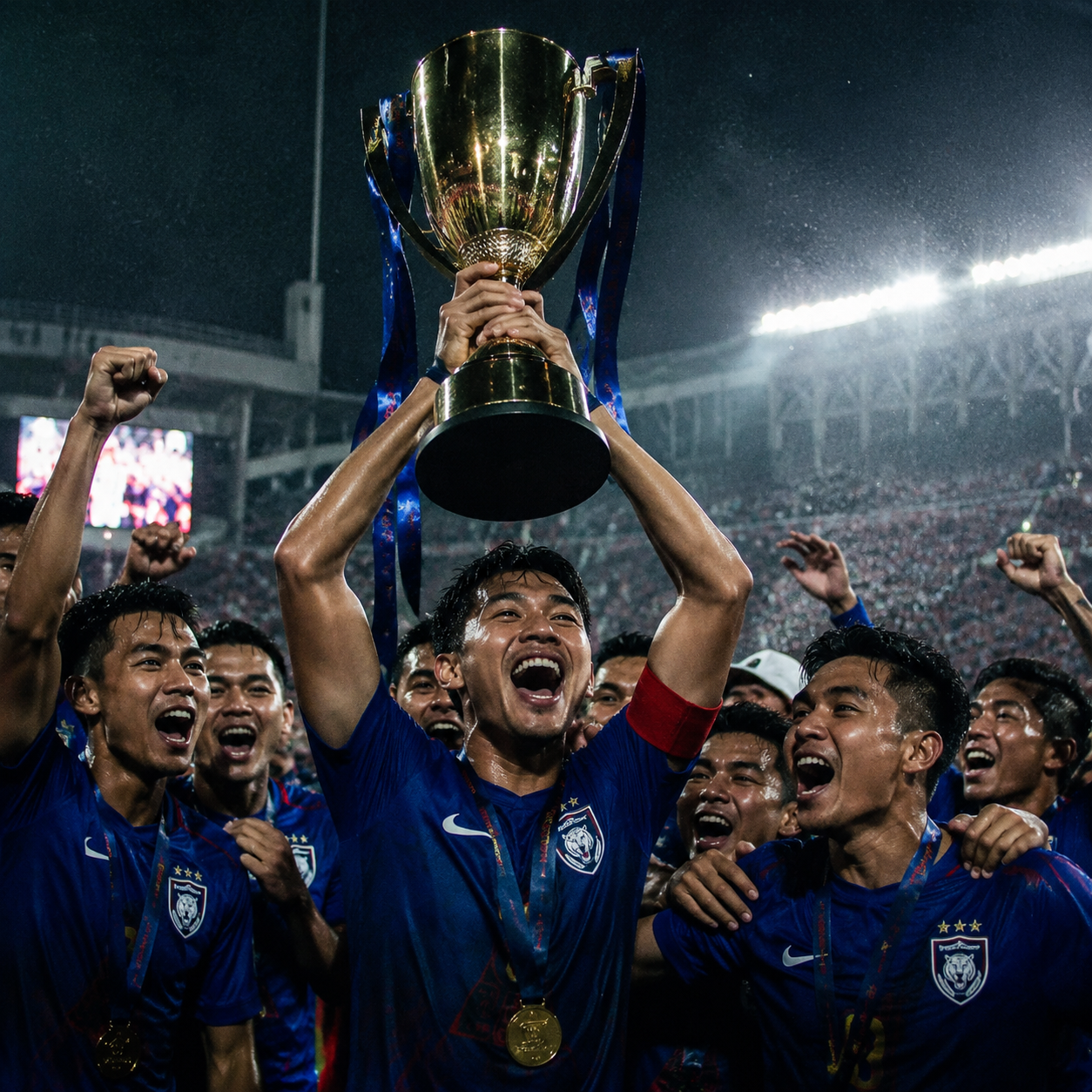
The 2023 Malaysia Super League title was Johor Darul Ta’zim’s tenth. Ten consecutive. No side in Malaysian football history has approached this concentration of domestic dominance, and when you stand back and look at the full decade — from 2014 to 2023, from the TMJ project’s early ambition to its current institutional weight — the scale of what JDT have built demands genuine assessment.
I was at Larkin when they won their first title in 2014. The atmosphere then had the quality of a statement being made. The question that night was whether it would sustain. The question now, ten years later, is what sustaining it at this level has meant for Malaysian football as a whole.
What JDT Built
The infrastructure story is the one that gets told least often but matters most. Johor Darul Ta’zim did not win ten Super Leagues through lucky recruitment or generous refereeing. They built something that Malaysian football had not seen before: a club with genuine organisational depth.
The youth academy, the professional contract structures, the full-time training environment, the analytical department, the medical staff — these were not afterthoughts. They were the foundation. When Johor invested in AFC Cup competition, they were not simply chasing continental glory. They were buying their players competitive exposure that the Super League alone could not provide.
The result is a pipeline. JDT’s first team is populated with players who came through that system, who have trained and competed at a level that no other Malaysian club can offer. Those players graduate into the national team with a different baseline of professional experience than their peers who have spent careers at lower-resourced clubs.
The Harimau Malaya Connection
The national team’s World Cup qualifying campaign draws disproportionately from JDT’s roster. This is not nepotism — it reflects a simple reality. The players who train hardest, in the best environment, against the best domestic competition, tend to be the ones who earn international selection.
Kim Pan-gon’s appointment in early 2022 brought a coach who was willing to build his national team philosophy around the structural habits JDT had already installed in the Malaysian game. The overlap was not coincidental.
The Competitive Health Question
Ten consecutive titles is also, honestly, a sign of an imbalanced competition. Malaysian football has benefited from JDT’s investment — the overall standard has been pulled upward — but no other club has been able to mount a sustained challenge. Selangor have tried. Kedah have had their moments. But none have maintained the organisational consistency required to break the cycle.
This is the standard critique, and it is legitimate. A healthy league needs genuine competition at the top. The COVID Super League season of 2020 compressed the competition and exposed how dependent the league’s credibility was on the quality and consistency of the JDT fixture.
The AFF Championship cycle provides occasional evidence that Malaysian football’s depth is improving beyond the single dominant club. The national team has players from Kedah, Selangor, and other sides performing at international standard.
But the Super League’s domestic competitive balance remains a structural issue that ten JDT titles cannot be separated from. They are both the evidence of that imbalance and the engine behind the rising floor.
The Tenth Title and What Comes Next
After the 2023 season ended, the conversation in Malaysian football had already moved to the AFC Champions League pathway — whether JDT could translate their domestic supremacy into the kind of continental performance that would put Malaysian club football on a genuine regional map.
That question had been building for years. The answer, delivered one Super League night at a time, is that Malaysian football now has at least one club with the infrastructure and ambition to ask it seriously.
Ten titles in. The work of the next decade is different from the work of the first.