
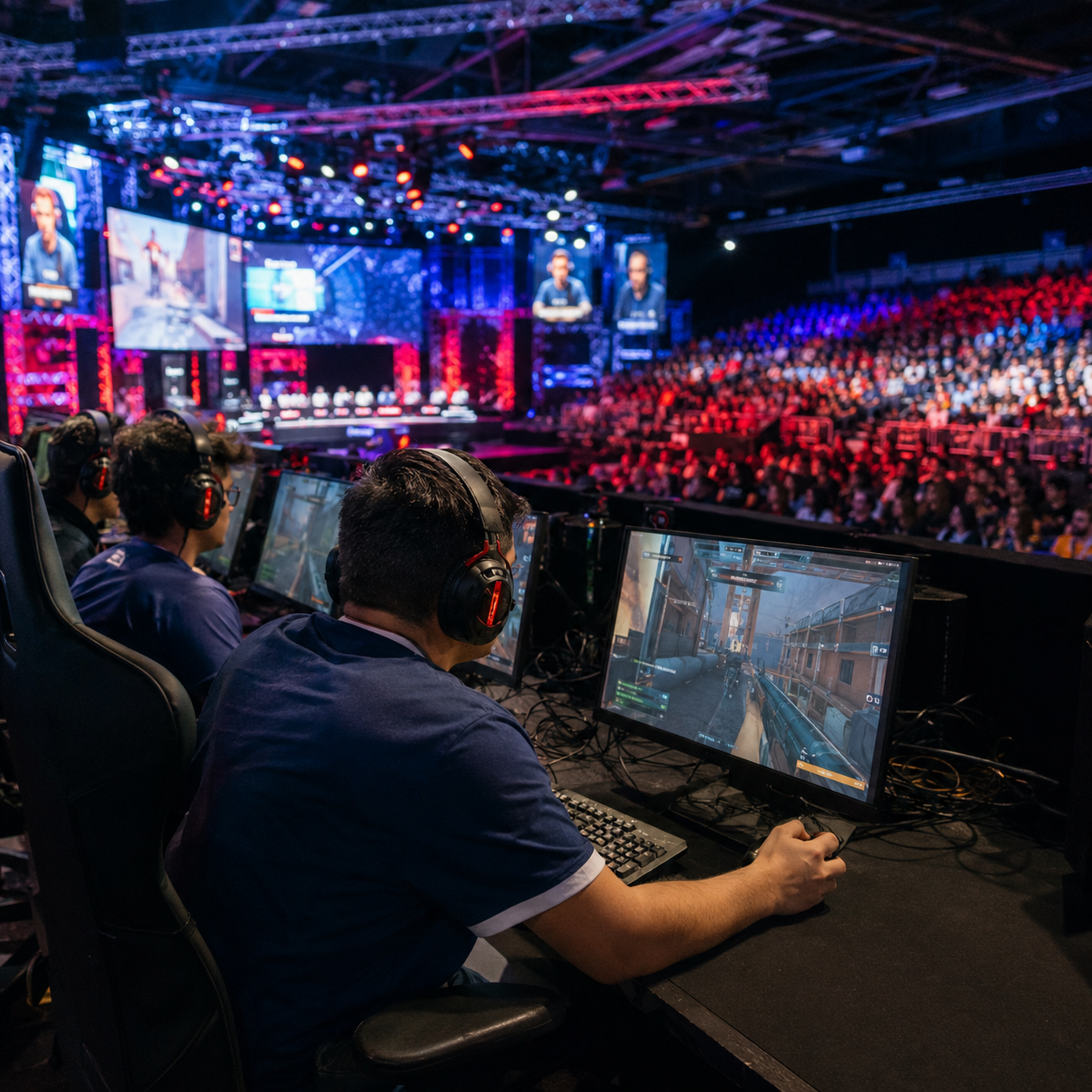
The International Convention Centre Birmingham is not a venue that often hosts history in the making. On the evenings of August 6 and 7, 2022, it did. The inaugural Commonwealth Esports Championships — an event that many in traditional sports circles had greeted with scepticism — produced something that demanded genuine attention.
Malaysia won three gold medals: eFootball, Men’s Dota 2, and Women’s Dota 2. No other nation won more than two. Malaysia topped the overall medal table.
I was following the event remotely, as were most Malaysian sports journalists — the Championships sat in a peculiar position, endorsed by the Commonwealth Games Federation but run as a separate event, with coverage that reflected that awkward positioning. But the results were unambiguous, and Malaysia Malay Mail’s reporting on the championship documented the achievement with appropriate scale.
What Three Golds Actually Meant
The medal haul was not luck. Malaysian Dota 2, in particular, had been a source of genuine international competitive performance for years before Birmingham. The local scene had produced players of real quality — athletes who had competed in The International’s qualification pathway and accumulated the kind of technical depth that is difficult to build without years of serious competition.
The eFootball gold added a different dimension. Football gaming has a casual market base but a serious competitive layer, and Malaysia’s representative performed at the level required to claim the top prize in a field of Commonwealth nations.
Three golds at a first-ever Commonwealth esports event was the kind of result that, in a traditional Olympic sport, would have generated national news coverage, sports ministry press releases, and an invitation to Putrajaya.
What Actually Happened
The coverage was scattered. The Malaysian sports media — this publication included — carried the results, but the story did not find the mainstream audience it deserved. This is not a critique of individual journalists. It reflects a structural reality: sports desks in Malaysia are resourced and configured around a canon of sports that does not, yet, include esports as a default.
The sports budget conversation that followed the 2022 Anugerah Sukan Negara included some reference to esports development. But the Birmingham achievement — three golds, topped medal table, inaugural world-level event — did not translate into the kind of sustained policy attention that a national judo or athletics success of equivalent magnitude would have triggered.
That gap between achievement and recognition is one of the most persistent problems in Malaysian esports.
The Dota 2 Foundation
Understanding why Malaysia performed so well at Birmingham requires understanding the Dota 2 ecosystem that produced the players. Malaysian Dota 2 has roots going back well over a decade, with a competitive culture that developed organically through local LANs, regional qualifiers, and eventually professional play.
The MCO period accelerated engagement in the game — confined to home, players put hours into the product that would form the base of the Birmingham squad’s collective skill. The pandemic’s unintended contribution to Malaysian Dota 2 is a genuine part of the Birmingham story.
A Template, Not a Ceiling
What Birmingham 2022 established, if the Malaysian esports ecosystem pays attention to it, is a template for performance at major multi-sport esports events. The preparation worked. The player selection worked. The competition results speak for themselves.
The next benchmark is the 2027 SEA Games, which Malaysia will host. If the country performs in esports at home the way it performed in Birmingham, it will be playing in front of a partisan crowd for gold medals in the country’s own arena.
That opportunity deserves to be built toward deliberately. Birmingham showed that when Malaysian esports is given the conditions to succeed, it succeeds at the highest available level.
The question is whether the right people were paying close enough attention.