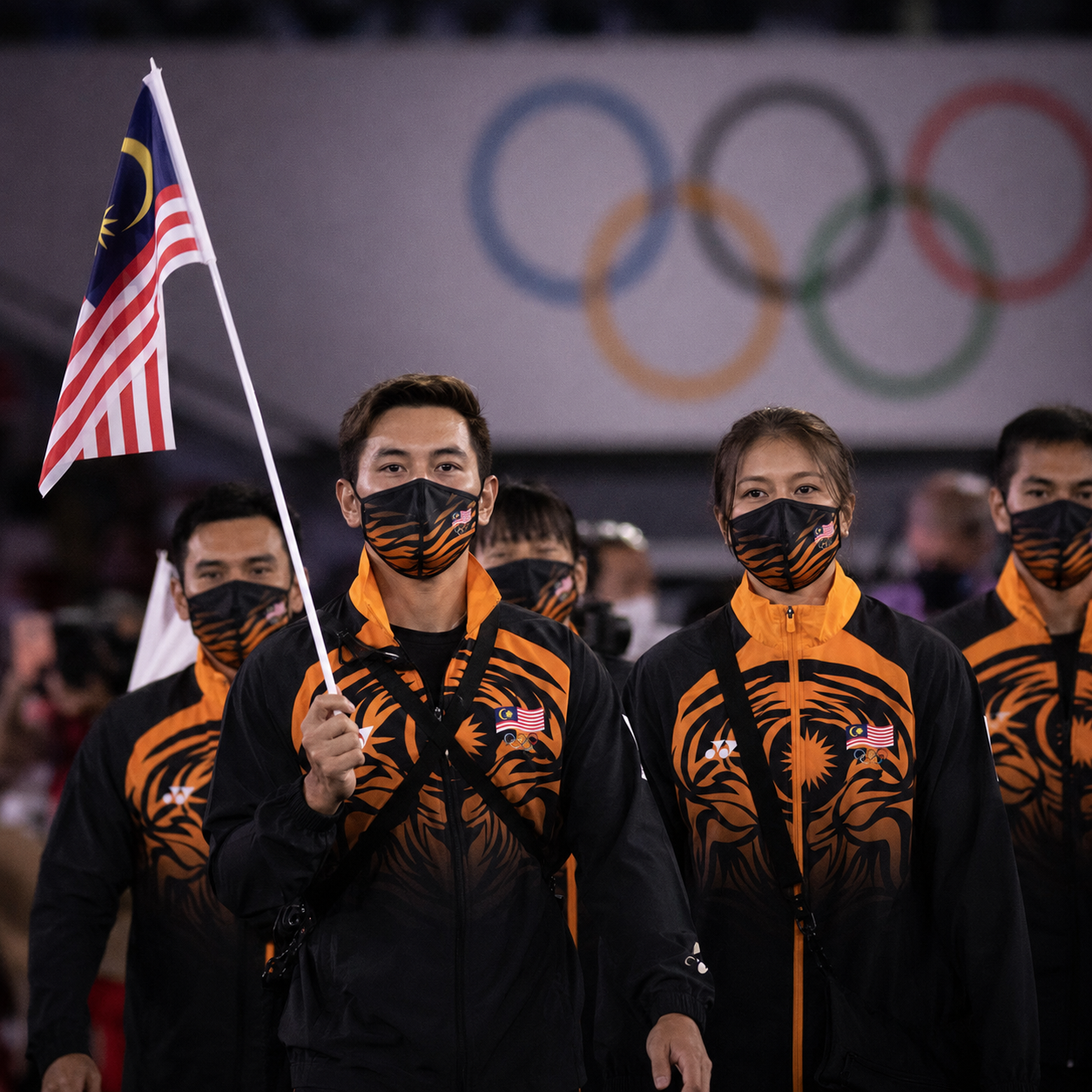
The Tokyo 2020 Olympic Games ended on 8 August 2021. Malaysia’s final medal tally was one — the bronze won by Aaron Chia and Soh Wooi Yik in men’s doubles badminton, on 31 July, in front of empty stands in the Musashino Forest Sport Plaza.
One medal from thirty athletes. The number invites comparison: to previous Malaysian Olympic campaigns, to regional neighbours, to the expectations that had been built in the months before the Games. Those comparisons are worth making. They are also incomplete without the context of what the Tokyo Games actually was.
The Medal That Mattered
The Aaron Chia/Soh Wooi Yik bronze was Malaysia’s first Olympic badminton medal in men’s doubles. That historical fact alone gives it a significance beyond the single-Games medal count. A first-ever medal in a specific discipline represents a competitive frontier being crossed — the establishment of proof that the country can produce athletes capable of winning at the highest level in that event.
The sports science story behind the medal was detailed and deliberate. The preparation was the most systematically structured that Malaysian doubles badminton had experienced. The outcome validated that investment.
The Near-Misses
The Tokyo campaign included performances that came close without delivering medals. Malaysian athletes in athletics, cycling, and other badminton events competed competitively and fell short of the podium by margins that, depending on your perspective, represent either the cruelty of Olympic competition or the distance between where Malaysian sport is and where it needs to be.
According to the Olympic Council of Malaysia’s official Tokyo report, several athletes achieved personal bests or career-high international performances in Tokyo, even without medals. This matters for the development narrative: athletes who produce their best performances under Olympic conditions, even without podium finishes, are the athletes most likely to improve further.
The events where Malaysian athletes had been predicted to medal but did not — women’s singles badminton, men’s cycling — produced their own post-Games analysis, much of it centred on the specific challenges of the pandemic preparation period and the unique psychological demands of an empty-venue Games.
The Broader Campaign Context
Thirty athletes represented Malaysia in Tokyo. They came from badminton, athletics, cycling, archery, diving, gymnastics, sailing, shooting, swimming, weightlifting, and wrestling. The spread reflects both the breadth of Malaysian Olympic participation and the thin distribution of resources and realistic medal expectations across that spread.
Malaysian Olympic planning concentrates resources in the disciplines with the highest medal probability. This is rational. It is also a choice about what kind of Olympic programme Malaysia wants to build — one focused on medal optimisation or one that maintains breadth as a development and participation value.
The KBS budget allocation debate that followed Tokyo was partly about this choice. Concentration produces medals. Breadth produces participation culture and the wider base from which elite athletes eventually emerge.
What Tokyo Said About 2024
By the time the Tokyo closing ceremony ended, the conversation in Malaysian sport had already pivoted to Paris 2024. The Paris preparation cycle drew directly on Tokyo’s lessons — what worked in the preparation, where the gaps were, what additional investment was required.
Tokyo was, in the end, a one-medal Games held in conditions unlike any preceding Olympics, delivered by athletes who had competed through a pandemic and the disruptions of a postponement that tested every aspect of their preparation.
One medal from those conditions is not nothing. Whether it represents the floor or the ceiling of Malaysian Olympic ambition is what the next cycle was always going to determine.