
Malaysia has been confirmed as the host of the 2027 Southeast Asian Games. The announcement, made by the Southeast Asian Games Federation, gives Malaysian sport a four-year window to prepare — not just in the logistical sense of venue preparation and athlete village construction, but in the more fundamental sense of assembling a national sporting programme capable of performing credibly in front of its own country.
I have covered Malaysian sport long enough to know that host nation performance matters. It matters for the athletes who carry the flag in their home city. It matters for the funding conversations that follow. It matters for the public relationship between the country and its sporting culture. 2027 is an opportunity and a deadline simultaneously.
What Hosting Requires
According to the SEA Games Federation’s official communication on the 2027 host announcement, Malaysia’s bid included commitments on venue infrastructure, athlete village provision, transportation, and Games administration. These are large organisational undertakings that draw on government resources and require sustained coordination across multiple ministries.
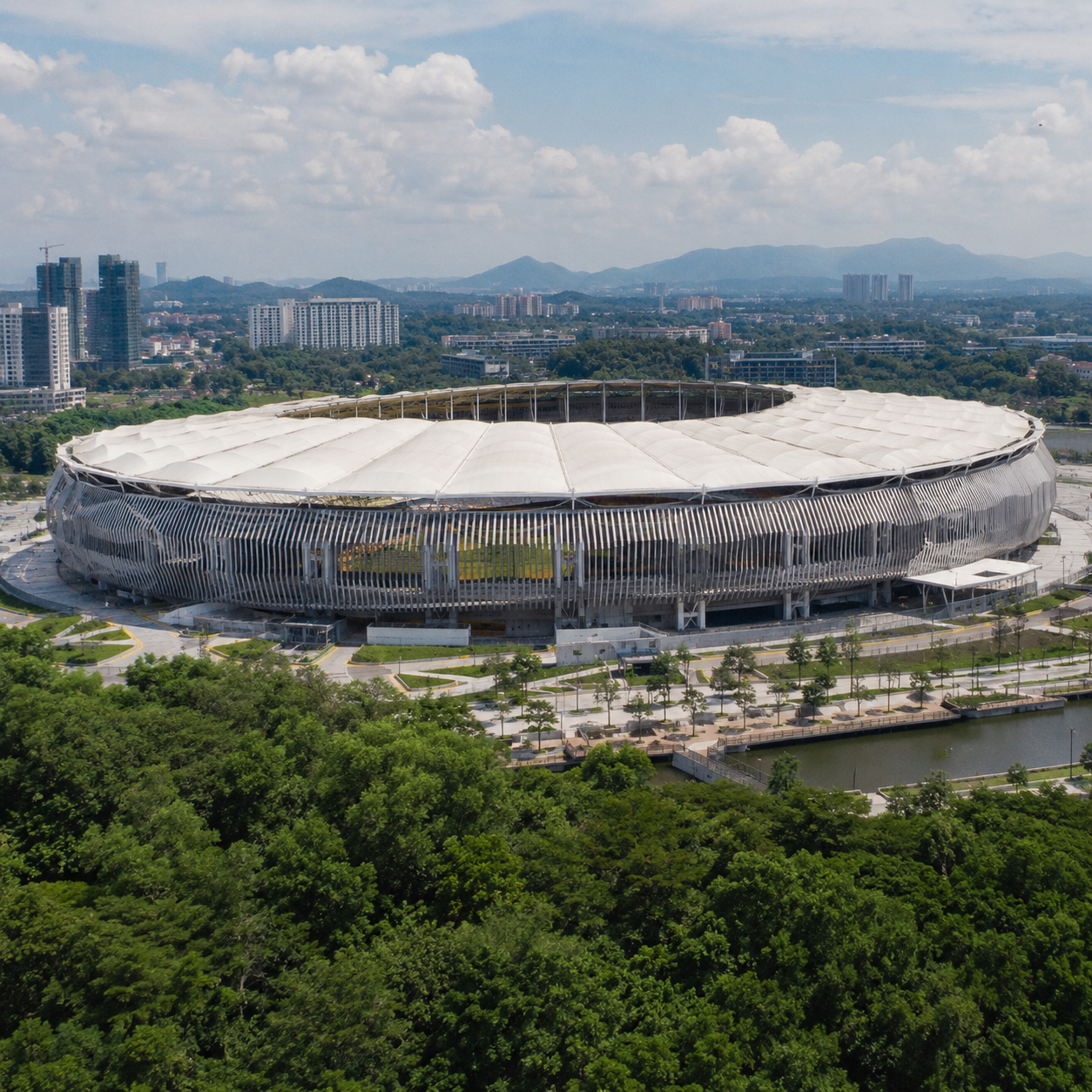
The primary venues — Bukit Jalil National Stadium for the opening ceremony and athletics, Stadium Axiata Arena for indoor sports, the existing aquatic and racquet sports facilities — are largely in place. The infrastructure challenges are concentrated in the specifics: upgraded technology, accommodation capacity, the particular demands of a multi-discipline Games operating across multiple sites simultaneously.
Malaysia hosted the SEA Games in 1977, 1989, and 2017. The 2017 Kuala Lumpur Games was the most recent reference point, and the organisational learning from that edition — both what worked and what needed improvement — is the starting baseline for 2027.
The Performance Question
Hosting the SEA Games is not simply an organisational challenge. It is a sporting opportunity. Host nations have historically performed better than their non-host form would suggest, partly through home crowd advantage and partly through the specific investment in athlete preparation that a home Games motivates.
The disciplines where Malaysia has realistic medal prospects — badminton, athletics, cycling, combat sports including MMA and the national martial arts, esports — span a wide range of training requirements. The Paris 2024 sports science infrastructure is the foundation, but a home Games performance programme requires additional investment in competition-specific preparation.
The esports community, if MLBB and other titles are on the 2027 programme as expected, will have a genuine opportunity to compete for gold in front of a Malaysian crowd. That possibility deserves to be built toward deliberately over the four-year window.
The Infrastructure Beyond the Stadium
What Bukit Jalil must become for 2027 is more than a renovated stadium. The SEA Games creates a four-year forcing function for improvements in sports infrastructure that would otherwise happen incrementally or not at all.
Training facilities, sports science support, athlete welfare programmes, development pathways for young athletes who could compete in 2027 — these are the investments that a Games justifies and that persist after the closing ceremony. The 2017 Kuala Lumpur Games left improved facilities and renewed sports culture energy. 2027 has the same potential.
The KBS sports budget will need to reflect the 2027 commitment across the full preparation period. Waiting until 2026 to accelerate investment is not how Games preparation works. The four-year window is not four years of normal preparation followed by a final push. It is four years of specific, Games-oriented development.
The Moment
Malaysia hosting a SEA Games at home is, for the athletes who will compete in it, the sporting occasion of their generation. Some of them are currently in secondary school. Some are in their early professional careers. The 2027 Games will define the peak of many Malaysian sporting careers.
What the country does with this four-year window — in investment, in infrastructure, in the patient development of the athletes who will carry the national flag — is the choice that matters. The Games will happen regardless. The question is what Malaysia does before them.