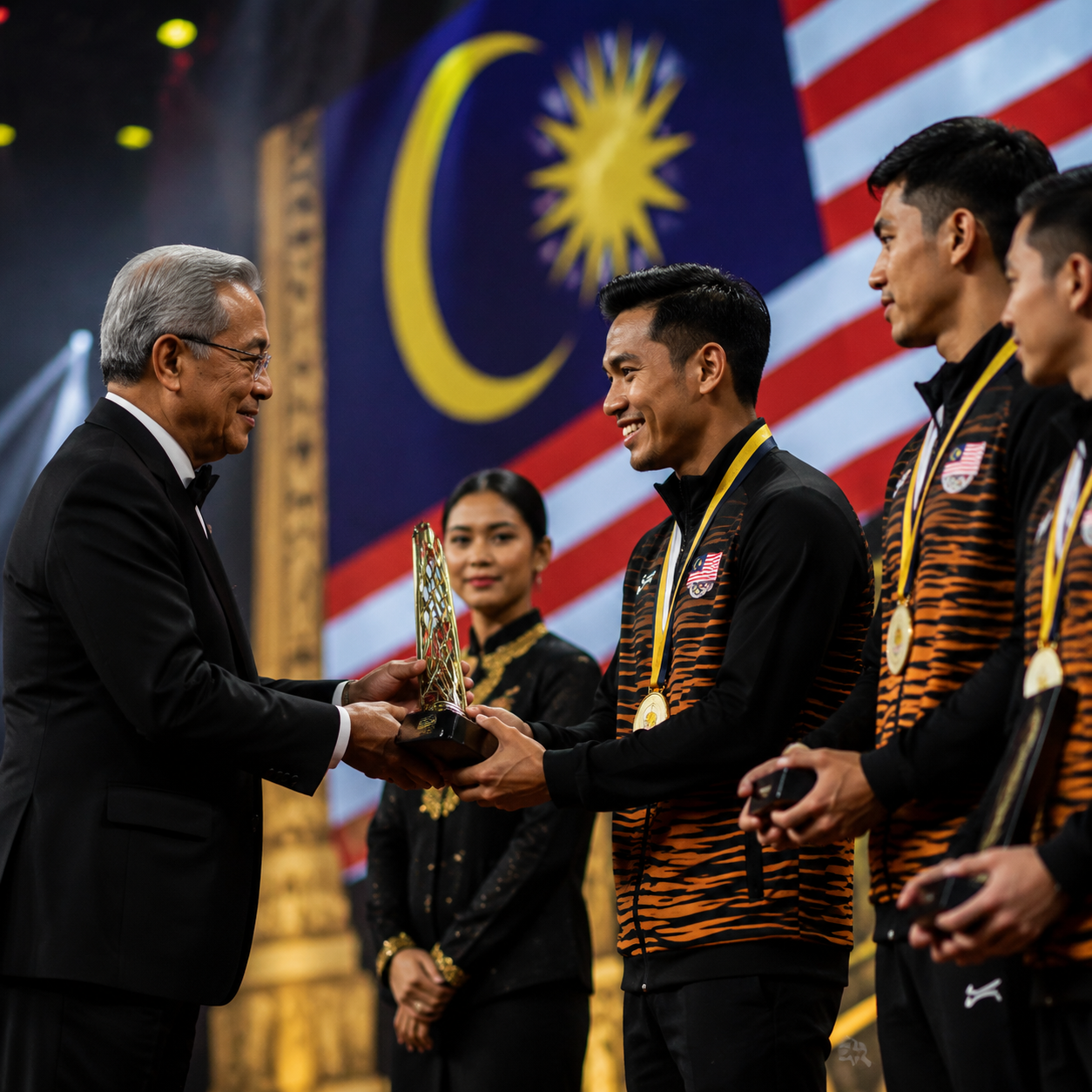
The Anugerah Sukan Negara is the highest formal recognition that the Malaysian sports system gives its athletes. It is an occasion that sits at the intersection of athletic achievement and state appreciation — a ceremony where the country’s sporting culture, and the values embedded in how it recognises excellence, is made briefly visible.
The 2022 edition recognised athletes who had competed through the pandemic period, the Tokyo Games, and a normalisation of competition calendars that was still not quite complete. The athletes being honoured had performed under conditions that no previous generation of Malaysian sports award recipients had faced.
Who Was Honoured
The major awards at the 2022 Anugerah Sukan Negara reflected the breadth of Malaysian sport’s competitive achievements. According to KBS’s official records of the ceremony, the Anugerah Atlet Lelaki and Anugerah Atlet Wanita recognised athletes across disciplines including badminton, athletics, and combat sports.
Aaron Chia and Soh Wooi Yik, whose Tokyo 2021 bronze medal had been Malaysia’s Olympic highlight of the year, were among those formally recognised. The recognition was appropriate: a medal of that significance deserved formal acknowledgement from the national sporting establishment.
The Commonwealth Esports Championships in Birmingham, where Malaysia topped the medal table, presented a more complicated recognition question. Esports remained in the process of being integrated into formal sports recognition structures in Malaysia, and the 2022 ceremony’s handling of that achievement — and of esports recognition more broadly — reflected both progress and the distance still to travel.
The Recognition Gap
One of the persistent criticisms of the Anugerah Sukan Negara is the gap between what gets formally recognised and the full breadth of Malaysian sporting achievement. Sports with smaller competitive communities, lower media profiles, or less established connections to the formal sports administration structure tend to produce fewer nominees and fewer recipients regardless of performance.
Equestrian, niche combat sports, adaptive sports, esports — disciplines where Malaysian athletes have achieved internationally — sit at the edges of the formal recognition structure in ways that mainstream track, field, and racquet sports do not.
This is not a unique Malaysian problem. Sports recognition systems everywhere tend to mirror existing sports culture hierarchies rather than challenge them. But the Anugerah Sukan Negara is one of the mechanisms through which Malaysian sport can signal that its values are broader than its historical defaults.
After Two Disrupted Years
The specific context of the 2022 ceremony was athletes who had competed through conditions that made achievement more complicated to evaluate. An Olympic bronze won in an empty arena, during a postponed Games, after months of pandemic disruption, represents something different from the same medal won under normal conditions — not lesser, but differently earned.
The ceremony provided one of the few occasions in the annual Malaysian sporting calendar where that broader context was acknowledged. The athletes in the room had navigated two years that tested not just their physical preparation but their psychological resilience, their adaptability, and their commitment to their sports under circumstances nobody had prepared them for.
The formal recognition matters. Not because athletes perform for awards — they do not — but because what a country chooses to formally recognise reveals what it values. The 2022 Anugerah Sukan Negara’s recognition of athletes who had performed through a pandemic was a statement, if an understated one, that the Malaysian sporting establishment understood what those performances had cost.
The KBS budget discussions that followed the ceremony would determine whether that understanding translated into investment. Ceremonies recognise the past. Budgets build the future.