
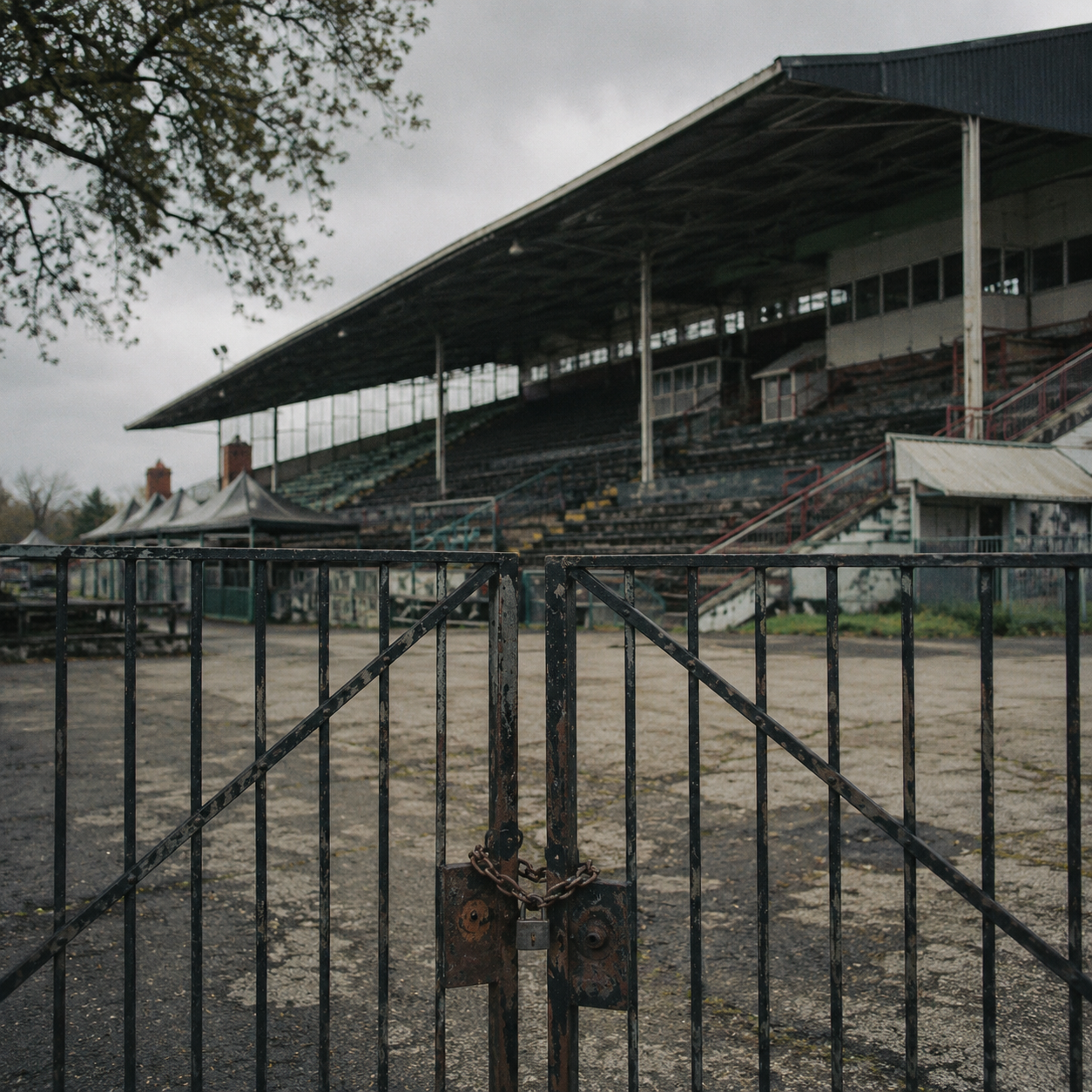
The vote to dissolve the Penang Turf Club was not a surprise. It had been coming for years, visible in the declining race day attendance, the narrowing prize money, the difficulty of attracting horses from Peninsular Malaysia’s shrinking pool of active trainers and owners. When the extraordinary general meeting was called in April 2024, the question was not whether members would vote to dissolve but whether there would be a meaningful debate before they did.
There was some debate. The outcome was dissolution.
I spoke to several members in the weeks before the vote, and the picture they described was of a club that had run out of viable alternatives. The financial model of regional horse racing in Malaysia has been under pressure for years. The Selangor and Perak circuits faced their own challenges. But Penang’s situation was more acute, because the land the track occupies — prime real estate in Georgetown’s expanding property market — made continuing to race an increasingly difficult case to make when the alternative was a land transaction that would benefit members substantially.
The Financial Picture
According to reporting by The Star on the Penang Turf Club’s financial position, the club had been managing rising operational costs against declining revenue for several seasons. Prize money, which attracts the quality of horses that attracts the crowds that sustain the prize money, had fallen below the threshold required to maintain a competitive race programme.
A horse owner with quality animals has options. Selangor offers more. Ipoh has its own circuit. The Singapore tracks, historically the regional benchmark, were no longer easily accessible given post-COVID travel and logistics changes. Sending good horses to Penang had become harder to justify financially, which meant Penang’s cards were increasingly contested by horses that were not the best available, which meant the crowds thinned further.
This is the self-reinforcing decline cycle that regional racing venues face everywhere. Penang Turf Club was not uniquely poorly managed. It was caught in a structural dynamic that the club’s best efforts could not reverse.
The Land Question
The Penang Turf Club site is substantial. Its location near Georgetown’s heritage zone and the surrounding development activity made it an asset whose value was dramatically higher as real estate than as a racing venue. The precise details of what the site’s future holds were not settled at the time of the dissolution vote, but the broad logic — that the members would benefit from a property transaction rather than continuing to fund an unviable racing programme — was clear enough.
This is the economic reality underlying the end of many historic sporting venues. The Selangor Turf Club’s 125th anniversary in 2021 prompted similar conversations about the long-term viability of its own site. What makes Penang’s dissolution different is the finality of it.
The Human Dimension
After the vote, the practical reality hit the people whose livelihoods were attached to the track. Stable staff, trainers, jockeys who had built careers around the Penang circuit — they knew the vote was coming but knowing does not make the preparation easier.
Some would find positions within the remaining Malaysian racing infrastructure. Some would leave the industry entirely. The horse racing ecosystem, which supports equestrian development at national competition level as well as the commercial racing side, would absorb some of the displacement. But the absorption would be partial.
What April 2024 Decided
The dissolution vote did not end Penang Turf Club on the day of the vote. The wind-down process, the regulatory requirements, the last race meetings — those would run through to May 2025. But April 2024 was when the decision was made. Everything after was consequence.
One hundred and sixty years of Malaysian sporting and social history was voted out in an extraordinary general meeting. The heritage, the memories, the generations of families who made Penang racecourse part of their lives — none of that was on the agenda. The agenda was about the financial reality of 2024. That reality won, as financial realities tend to.