
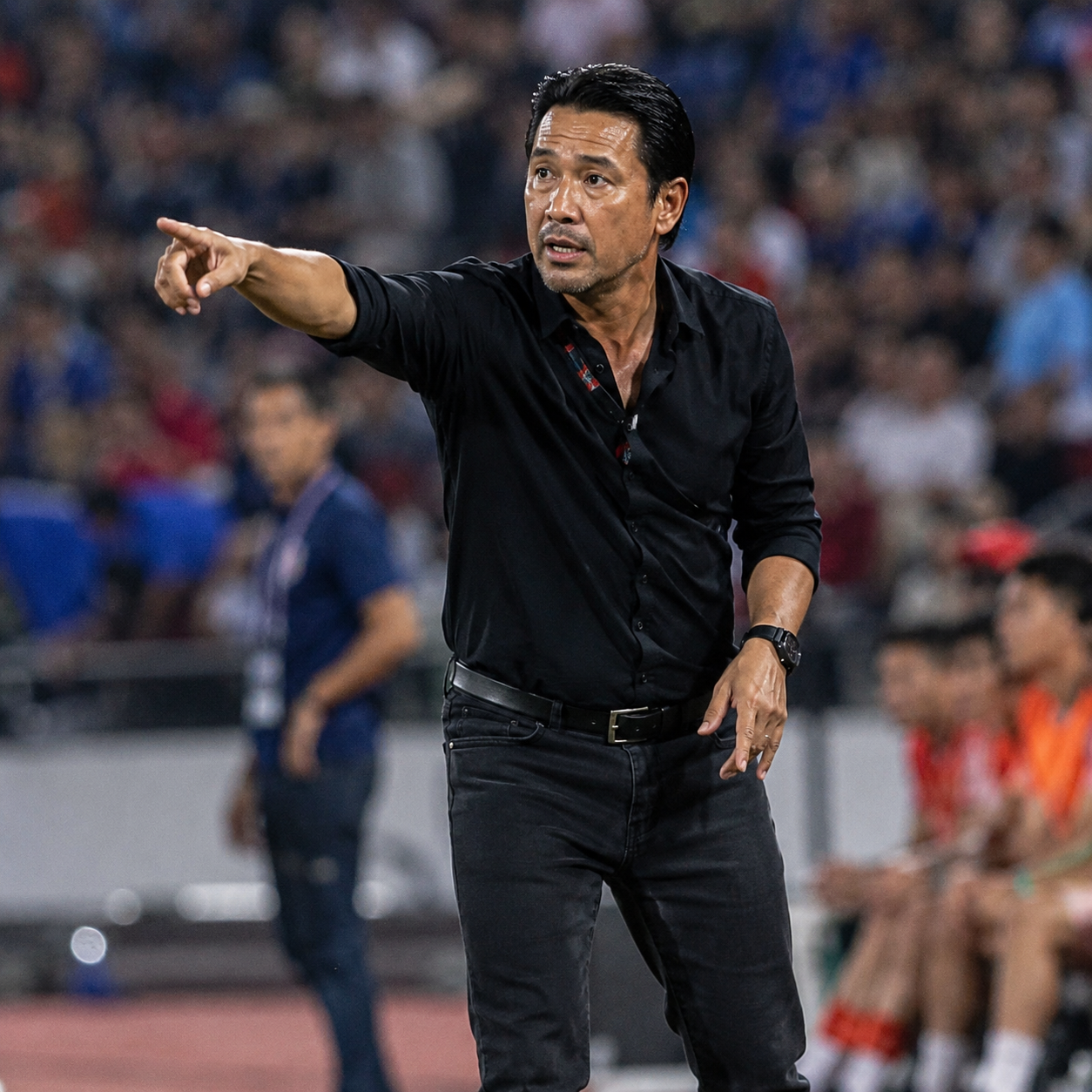
Kim Pan-gon was appointed head coach of the Malaysia national football team in January 2022. He had managed South Korea’s under-23 side, understood Asian football’s development challenges, and arrived at FAM with a brief to build something more durable than the coaching carousel that had preceded him.
Ten months in — with the AFF Championship approaching and a World Cup qualification cycle beginning to take shape — I wanted to assess what had actually changed beyond the usual new-manager narratives.
The First National Camp
The first impressions from Kim Pan-gon’s early camps, relayed to me by players and coaches who were present, were of a man who was rigorous and organised in ways that the previous setup had not been. Training sessions started and ended at the declared times. Video analysis was a structured component, not an afterthought. The tactical shape was explained, not just imposed.
This sounds like basic professionalism. In the context of Malaysian national football history, it was a step forward.
According to FAM’s official announcement and subsequent reporting by Bernama, Kim Pan-gon’s mandate included building a long-term national team structure rather than pursuing short-term results. This was an unusual brief, and the FAM president’s willingness to articulate it publicly created at least some protective cover for a development cycle that would inevitably include difficult results.
What He Introduced
The visible tactical change was a defensive pressing system with clearly defined triggers. Malaysian national teams of the recent past had tended toward a mid-block that invited pressure and relied on individual quality to create on the counter. Kim Pan-gon was not opposed to defending deep when the opponent demanded it, but he installed a first-press structure that changed the team’s posture in a way you could see from the stands.
The second change was positional fluidity in the attacking phase. Not the chaotic kind — the structured kind that requires players to understand the system well enough to make intelligent off-ball movements within it. This took months to embed and was still being refined at the end of his first year.
The third change was squad rotation philosophy. Kim Pan-gon has been willing to drop established names for form-based selection in a way his predecessors were not. This is psychologically significant in the Malaysian football environment, where senior player relationships and club affiliations have historically influenced selection in ways they should not.
The [JDT] Question
The JDT Super League dominance created a ready-made pipeline of players already exposed to a professional training environment. Kim Pan-gon’s system, which rewards structural discipline and pressing intensity, aligned reasonably well with the habits JDT had already embedded in their players.
This is a genuine strength of the current setup: the club-national alignment is more coherent than it has been. Players arriving from JDT into national camp do not need to completely recalibrate to a foreign system. This matters when preparation time is short and tournaments move quickly.
The Honest Assessment
Ten months is not enough time to transform a national football culture. It is enough time to put a visible foundation in place and to establish whether the foundation is going to hold.
The foundation Kim Pan-gon has put in place is visible and coherent. The pressing structure works at the level Malaysian opponents deliver it. The tactical flexibility is improving. The squad selection has more logic than sentiment in it.
What the first year did not resolve is the individual quality ceiling at the top end of the roster. Against Thailand, against Vietnam, against the better South Korean and Japanese club sides in AFC competition — those encounters in the subsequent qualifying cycle — the technical gap between Malaysia’s best players and their equivalents remained.
That gap is not Kim Pan-gon’s to close alone. It requires youth development investment, better club infrastructure, and the patience to let a generation develop.
He has given that generation something to develop into. That is not nothing. After the years preceding him, it is actually quite a lot.