
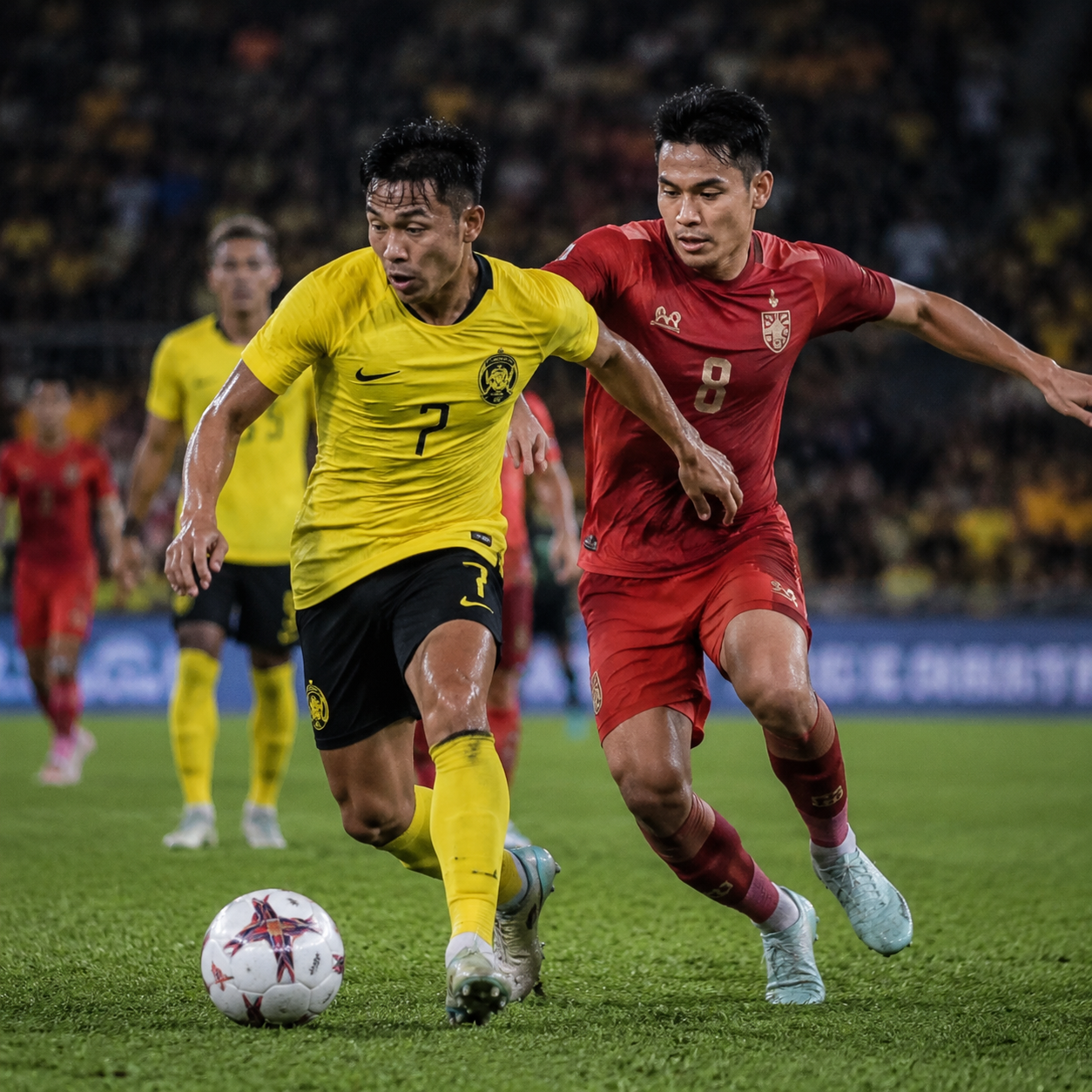
There is a particular kind of result in football — the result that represents genuine progress and genuine limitation in the same scoreline. Malaysia’s AFF Championship 2022 campaign ended in the semi-finals against Thailand. The aggregate loss was clear. The overall tournament performance, viewed without the blinkers of either disappointment or excuse-making, was more complicated than the final result.
The ASEAN Football Federation Championship sits in a strange place in Malaysian football’s emotional landscape. It is both the tournament where regional bragging rights are settled and the one that reminds Malaysian fans how far the gap to the true regional elite remains. Thailand and Vietnam have operated at a different level from Malaysia in recent cycles. The 2022 edition did not change that fundamental ordering.
The Group Stage and What It Showed
Malaysia came through the group stage without serious difficulty, which was the expected outcome and largely delivered. The performances against the lower-ranked opponents were professional without being spectacular — evidence of a team that had absorbed Kim Pan-gon’s structural ideas well enough to execute against teams of that level, but not yet fully fluent enough to impose their game against better opposition.
The signs were there in how Malaysia defended. The pressing structure Kim Pan-gon had introduced was visible — triggers, recovery runs, compactness. His first year in charge had delivered the skeleton of a defensive approach that was legibly different from what came before.
The question the semi-final answered was what happened to that structure when the opponent had the technical quality to dismantle it.
The Thailand Question
Thailand won the 2020 AFF Championship and were the pre-tournament favourites in 2022. The Chanathip generation had given Thai football a window of genuinely elite regional quality, and the system behind them — the Thai League, the youth development infrastructure, the sustained coaching consistency — continued to produce players who were simply better prepared than their Malaysian equivalents at the top end.
According to AFF Championship official records, the semi-final aggregate told a story of a gap that pressing shape and tactical organisation could manage but not close. Against opponents of Thailand’s quality, the individual technical ceiling became the determining factor.
This is not a criticism of Kim Pan-gon or the players. It is an honest observation about where Malaysian football sits on the regional quality spectrum.
Semi-Final Twice Running
There is a version of the narrative where two consecutive AFF semi-finals represents measurable progress. In the early 2010s, Malaysia won the AFF Championship in 2010 and then spent several years failing to replicate that performance. A sustained semi-final record — competing at the last four every tournament — would represent structural advancement rather than a one-off result.
Whether 2022 represents that or whether it represents the new ceiling is the question the next AFF cycle will begin to answer. The World Cup qualifying campaign provided some evidence that the improvement was real. The JDT pipeline continues to deliver players with better competitive preparation than their predecessors.
What the Semi-Final Left Unanswered
Malaysian football left the 2022 AFF campaign with a more organised team than it entered with, a coaching structure that had shown it could prepare a squad systematically, and a clear view of where the next competitive frontier lies.
None of that answered the harder question: can Malaysia produce a generation of players who are individually capable of deciding matches against Thailand and Vietnam in the same way those nations’ best players can decide matches against Malaysia?
That question lives at the intersection of club football quality, youth development investment, and the patience required to let a development cycle run. It is not answered in a semi-final defeat.
But the semi-final, at minimum, confirmed that Malaysia had earned the right to ask it seriously again.