
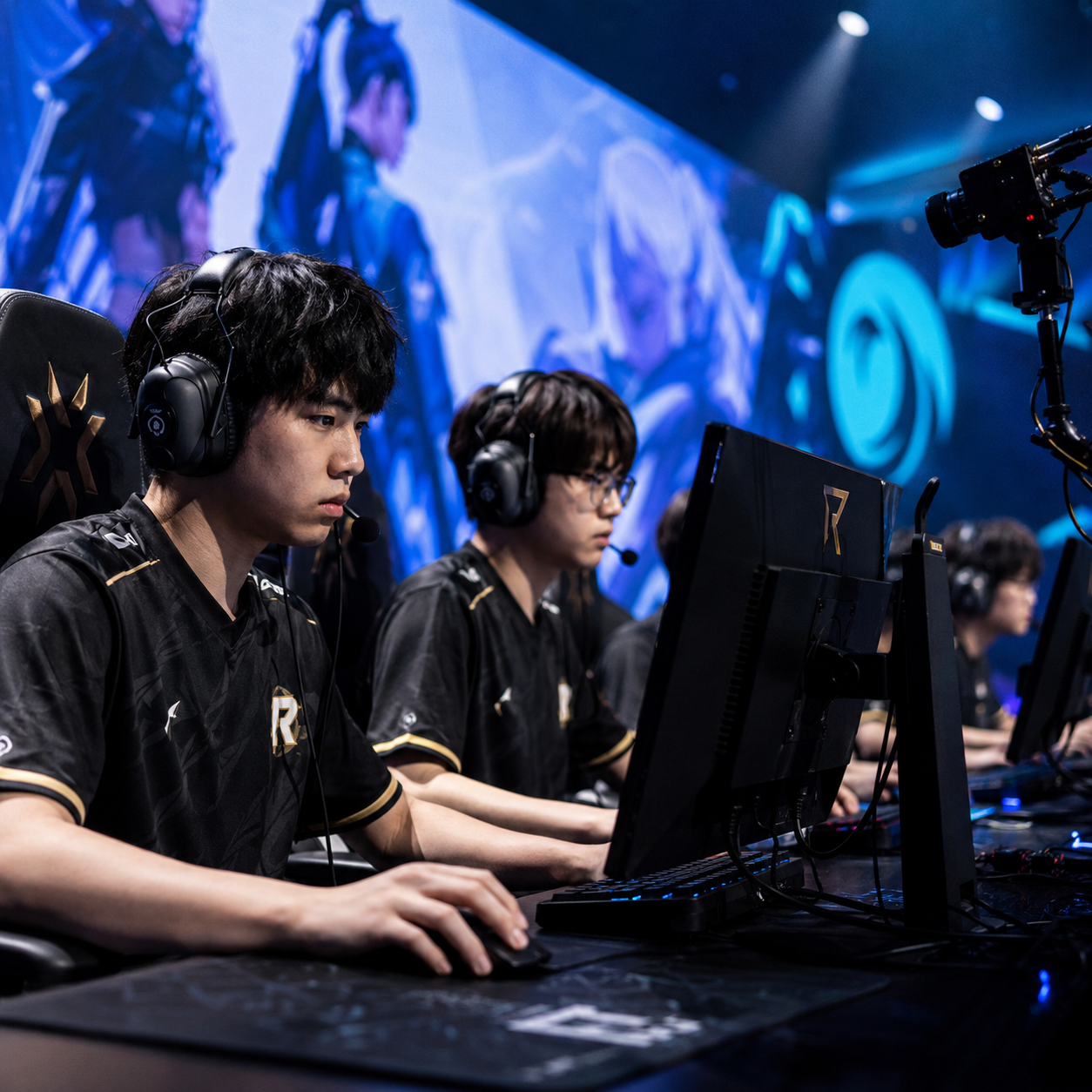
VALORANT’s Champions Tour restructure in 2023 was one of the most significant organisational shifts in esports in recent years. Riot Games consolidated its top competition into four international partnership leagues — Americas, EMEA, China, and Pacific — each with a fixed set of franchised organisations. The Pacific league, which covers East and Southeast Asia, is where Malaysian VALORANT lives. Or rather, where it aspires to live.
No Malaysian organisation holds a Pacific partnership slot. Of the twelve organisations in the inaugural VCT Pacific lineup, the affiliations tilt heavily toward South Korea, Japan, and the established Southeast Asian esports businesses. Paper Rex, the franchise most associated with Southeast Asia’s VALORANT identity, is Singaporean-Filipino in its ownership and player makeup. Malaysian players are present — individual Malaysian athletes have found their way into Pacific rosters — but there is no Malaysian flag at the partnership level.
What the Partnership Model Actually Means
To understand why Malaysia’s absence matters, it helps to understand what VCT Pacific partnership provides. According to Riot Games’ official VCT Pacific documentation, partnered organisations receive revenue sharing, league stipends, support structures, and a guaranteed competitive spot regardless of annual results. This stability allows genuine long-term investment in player development, coaching infrastructure, and academy pipelines.
Organisations outside the partnership framework — which includes every Malaysian esports company — can still develop VALORANT talent. They can compete in the Challengers pathway, which feeds into VCT Pacific through promotion events. But the economics are fundamentally different. Without the financial security of a partnership slot, Malaysian organisations cannot commit to the same depth of player development infrastructure.
The result is a development gap that compounds over time. Malaysian VALORANT players are good. Some are excellent. But they are developing in an environment that does not have the structural stability to systematically convert that talent into Pacific-level professionals.
Malaysian Players in Pacific Rosters
Several Malaysian players have found their way into Pacific-adjacent organisations, which tells a more nuanced story. The talent is there; it is the pathway that is incomplete. A Malaysian player good enough to earn a roster spot in a Pacific organisation has, in effect, self-selected past the development gap. They are the outliers who made it despite the structural disadvantage, not because of structural support.
This mirrors a pattern familiar from the MLBB M5 analysis: Malaysian esports produces individuals who can compete at the highest level. The question is how many are lost in the gap between grassroots talent and international competition because the middle layer is underdeveloped.
What Changed After Birmingham
The Commonwealth Esports Championships in 2022 included Dota 2 but not VALORANT, so the benchmark for Malaysian VALORANT’s international competitive ceiling remained unclear from that performance.
What the Commonwealth performance did establish was that Malaysian esports, under the right conditions, can prepare and execute at a world-class level. The question is whether those conditions — structured preparation, financial support, credible opposition — can be replicated consistently enough to produce VCT Pacific-quality VALORANT teams.
PIKOM, the national tech association, and the Esports Malaysia organisation have been working on frameworks that would support this kind of long-term development. The results will not show up at the Pacific level immediately. Development cycles in esports run in years, not seasons.
The Honest Timeline
When I talk to people in Malaysian esports administration, the realistic conversation about VCT Pacific representation involves timelines measured in years, not months. An application for partnership consideration — even if the framework expands — requires an organisation with financial stability, a proven competitive track record, and a commercially viable presence in the Malaysian market.
Building all of that simultaneously, while also competing in Challengers and developing the talent required to compete at Pacific level, is a genuine organisational challenge.
The Malaysian VALORANT community is not waiting passively. The grassroots scene is active, the top domestic players are skilled, and the appetite is real. What is missing is the structural bridge between that energy and a seat at the top table.
For now, Malaysian fans of the Pacific league watch teams from other nations. That will change. The question is when — and whether the investment decisions being made today are building toward that moment or delaying it.