
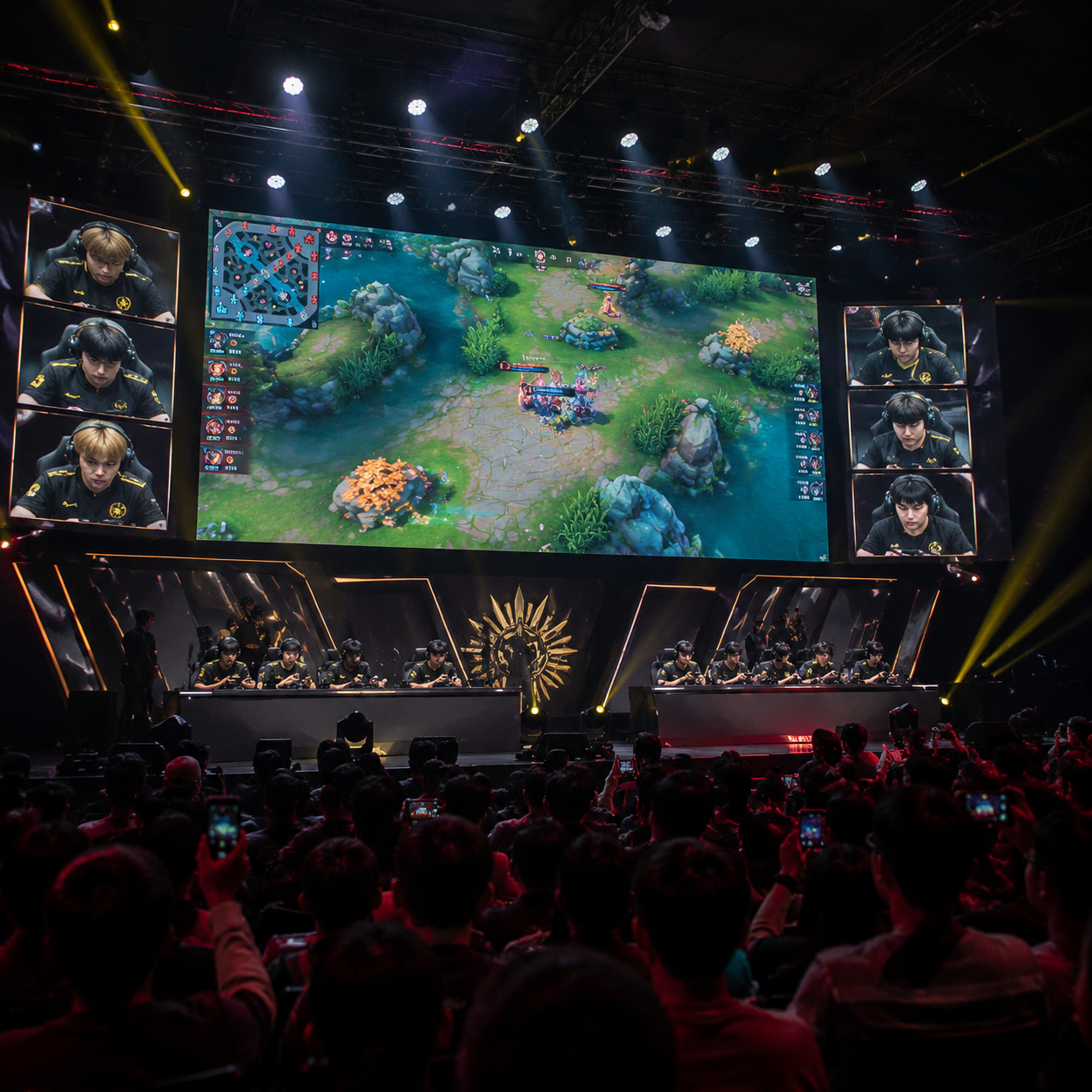
The SM Mall of Asia Arena in Manila held 22,000 people on the night of the M5 World Championship grand final. AP Bren, the Filipino organisation that had been building toward this moment for years, won their home World Championship in front of a crowd that treated it like a national sporting occasion.
No Malaysian team was on that stage. That is the starting point for any honest conversation about what M5 meant for Malaysian mobile gaming.
The Selection Picture
The MLBB M-Series World Championship uses a regional qualification system to determine which teams represent each territory. Southeast Asian slots are among the most competitive, given the game’s concentration of top talent in this region. Malaysian teams entered the qualification pathway. None advanced to the World Championship itself.
This is not a scandal. The competition is genuinely fierce. The same Philippine, Indonesian, and Malaysian teams cycle through these qualifiers each cycle, and the margins between qualifying and non-qualifying finishes are often narrow. But narrow margins, compounded across multiple qualification cycles, tell a structural story.
Malaysian MLBB teams have been close to World Championship qualification without achieving it consistently. The question worth asking is not whether individual Malaysian players are good enough — they clearly are — but whether the organisational infrastructure around those players is matching pace with the Filipino and Indonesian programs that keep qualifying.
What AP Bren Built
AP Bren’s M5 victory was not an accident of tournament bracket luck. The organisation had competed at M-Series events for years, building institutional knowledge of what World Championship-level competition requires. Their roster preparation, coaching staff, and analytical approach reflected years of accumulated understanding.
When I watch AP Bren’s VODs alongside those of Malaysian teams competing in the regional circuit, the technical differences are real but not enormous. The gap is more visible in macro decision-making — the game-state reading, the objective prioritisation, the composure under elimination pressure — qualities that come from competing repeatedly at the highest level.
Malaysian MLBB teams have not consistently had that competitive environment. They have had talent. They have not had the systematic exposure to top-level competition that turns talented teams into championship-calibre organisations.
The SEA Games Contrast
At the SEA Games in Hanoi the previous year, Malaysia won bronze in MLBB. That result, while credible, involved a national squad assembled for a multi-sport event rather than a professional team with months of cohesive preparation.
The contrast between a bronze at a multi-sport games and absence from the World Championship is instructive. Malaysia can assemble good national teams for specific tournaments. What it has not managed is developing a professional organisation that qualifies for and competes at the M-Series level consistently.
The Commonwealth Esports Template
Malaysia topped the medal table at the 2022 Commonwealth Esports Championships in Birmingham in Dota 2. That achievement is real and reflects genuine competitive depth in specific games. It also illustrates the point: Malaysian esports performs better in titles with longer domestic histories and deeper grassroots infrastructure.
MLBB’s Malaysian competitive scene is substantial, but the top-end organisational development has not kept pace with the game’s most competitive territories. The teams that qualify for M5 are backed by organisations with professional structures, analytical departments, and academy pipelines.
A Useful Disappointment
Absence from M5 Manila should not be processed as failure in some absolute sense. It is a calibration. Malaysian MLBB knows now, concretely, what the gap to the World Championship looks like — not in vague aspirational terms, but in the specific qualification results of the teams that did and did not make Manila.
With Malaysia hosting the 2027 SEA Games, the local esports community has a performance target that the whole country will be watching. The M-Series World Championship cycle and the SEA Games MLBB event are connected moments in the same development timeline.
AP Bren won M5 in front of 22,000 people in Manila. In 2027, there will be 22,000 people in Kuala Lumpur hoping to see Malaysian names on the stage. The work between now and then is what determines whether that is realistic or wishful.